










If you worked in Austria and paid Lohnsteuer, there’s a strong chance you overpaid. Whether you worked in tourism, construction, agriculture, manufacturing, healthcare, or any other industry — Refutax handles your entire Arbeitnehmerveranlagung (employee tax assessment) with the Austrian Finanzamt so you don’t have to.
Austria has a generous tax system for employees, but only if you file a tax return. The Austrian Arbeitnehmerveranlagung (employee tax assessment) is voluntary for most workers, which means thousands of foreign workers leave money on the table every year simply because they don’t file. If you worked in Austria for part of the year, your employer deducted Lohnsteuer based on a monthly calculation that assumes you earn the same amount every month for the full year. If your income varied, or you only worked for a few months, you almost certainly overpaid. Austria also has generous deductions and tax credits that are only applied when you file: the Verkehrsabsetzbetrag (commuter tax credit), Pendlerpauschale (commuter allowance), Sonderausgaben (special expenses), and Werbungskosten (work-related expenses). Refutax ensures you claim every deduction available.
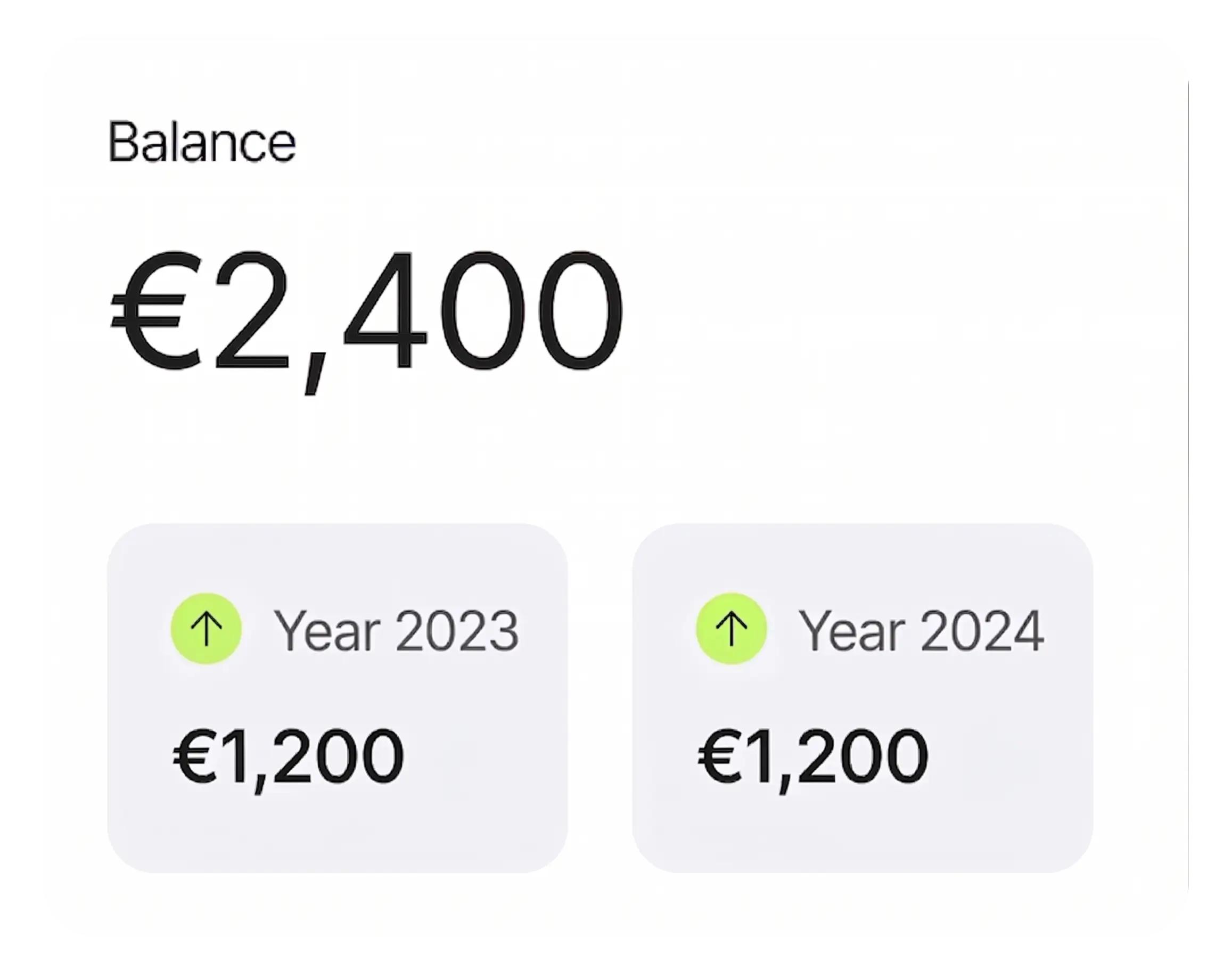
Austrian tax refund per year
Austria offers some of the most employee-friendly tax deductions in Europe. Here are the three main ways we help you get your money back.
Your Austrian employer deducted Lohnsteuer from your wages each month. If you only worked part of the year, your annual income is lower than what the monthly tax calculation assumed, and you’re owed a refund. We file your Arbeitnehmerveranlagung (employee tax assessment) with the Finanzamt — this is Austria’s version of a tax return for employees. Refunds typically range from €500 to €3,000+ depending on income, work duration, and applicable deductions.
If you worked in Austria and have children — even if they live in your home country — you may be entitled to Familienbeihilfe (Austrian family allowance). The amount depends on your child’s age and ranges from €120 to €174 per child per month, plus an additional Kinderabsetzbetrag (child tax credit) of €61.80/month. For families with multiple children, an extra sibling bonus (Geschwisterstaffel) is added. We handle the full application with the Finanzamt on your behalf.
Austria has a generous commuter allowance system (Pendlerpauschale) that gives tax-free deductions based on the distance between your home and workplace. If your workplace was more than 20 km from your residence, or if public transport was not available, you may be entitled to the large Pendlerpauschale (große Pendlerpauschale) of up to €3,672/year. On top of that, we claim Werbungskosten (work-related expenses) including work clothing, tools, professional training, union fees, and the automatic Verkehrsabsetzbetrag (commuter tax credit) of €421/year.
Stats
Services Offered
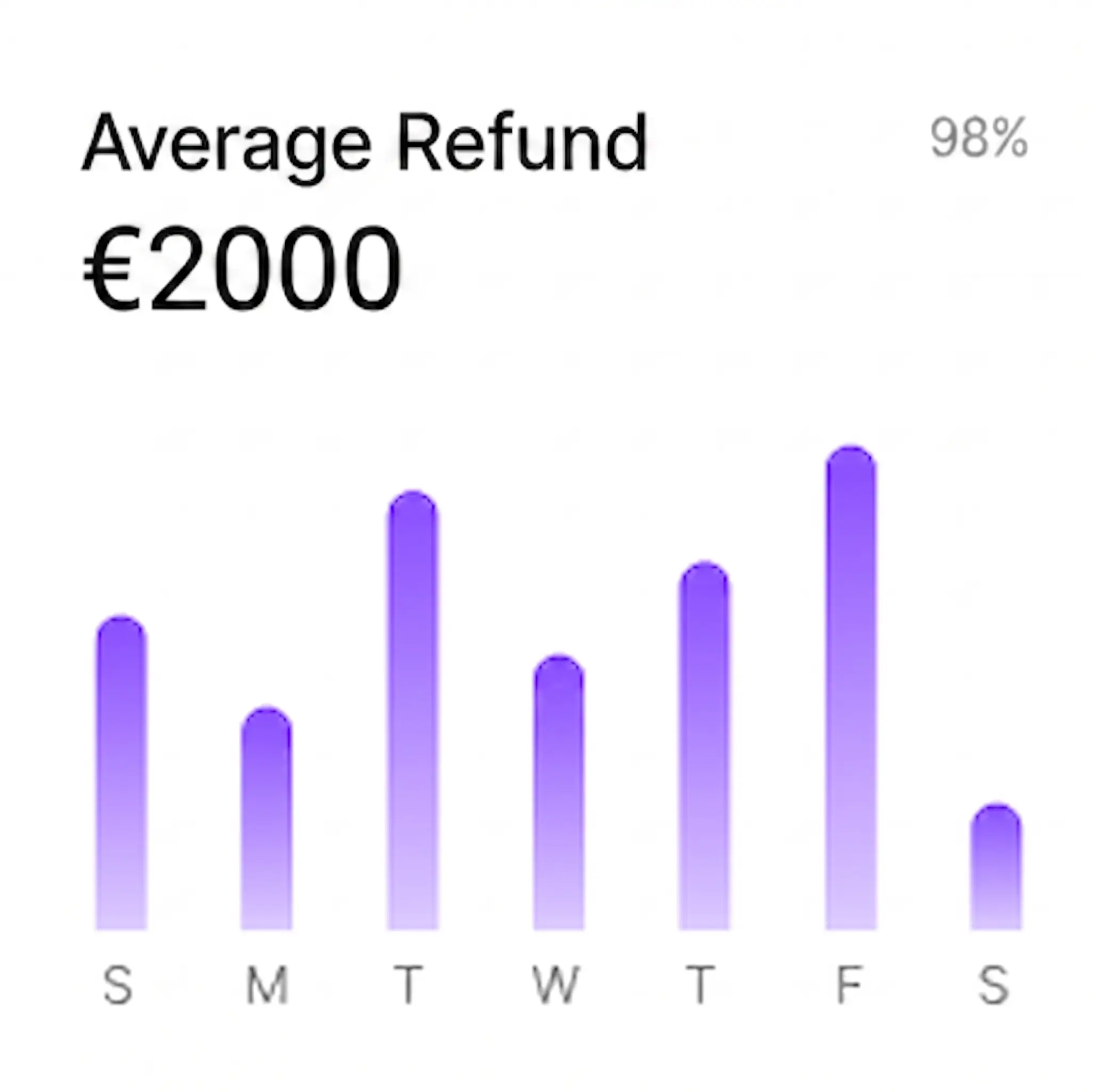
Avegare Refund
Average refund per client per year
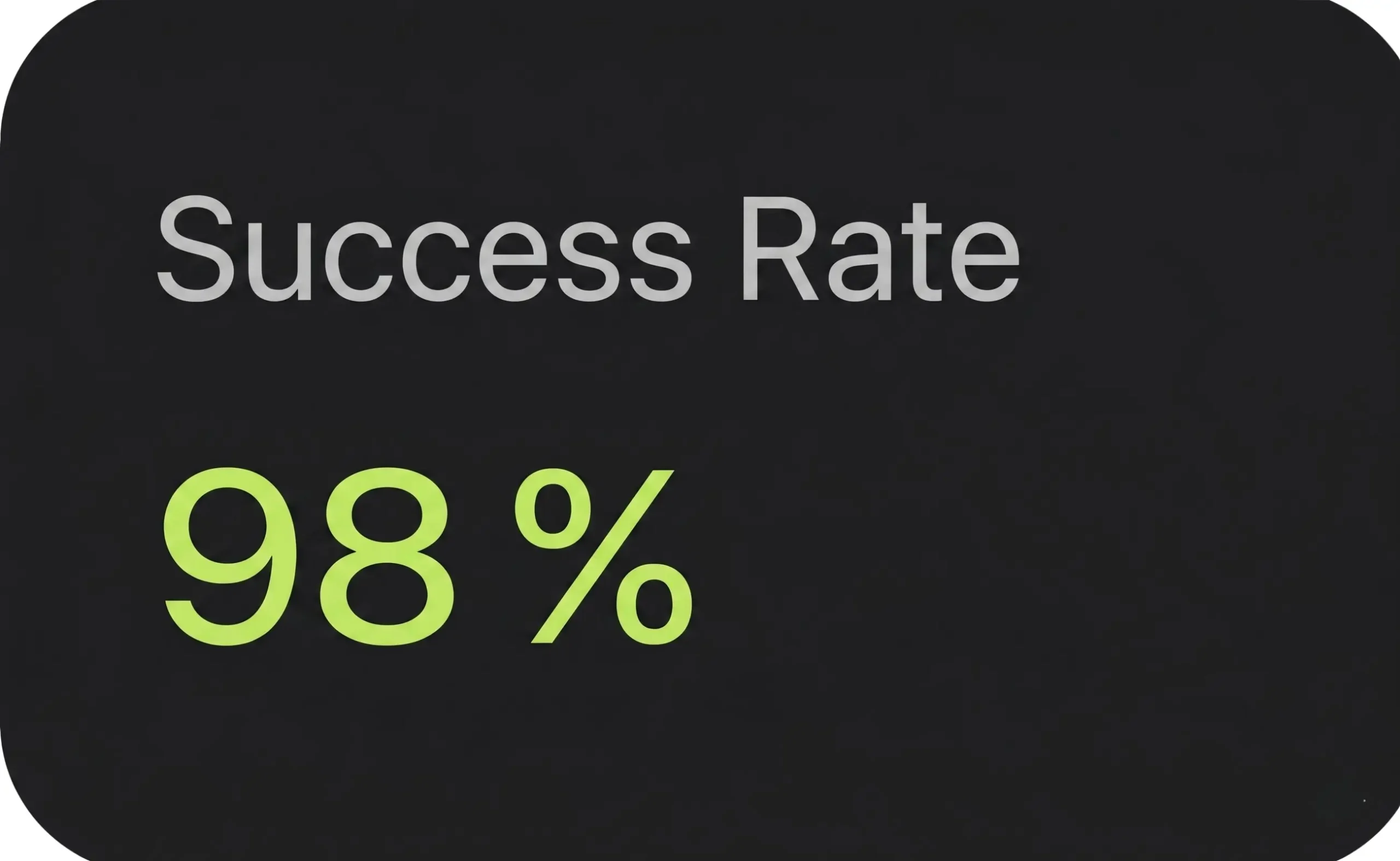
Succes
Successful claims filed
Docs
From documents to filing
Years
Of past taxes you can still claim
You are most likely eligible if any of the following apply:
Not sure? Use our free eligibility check or call us — we’ll tell you within minutes.
Don’t worry if you’re missing some — our team can help you get replacements.
Everything you need to know about getting your tax refund.
Yes. You do not need to be in Austria to claim your refund. As a former resident or non-resident worker, you can still file an Arbeitnehmerveranlagung with the Austrian Finanzamt. Refutax handles everything remotely, and your refund is transferred directly to your bank account anywhere in the world.
The Arbeitnehmerveranlagung is Austria’s employee tax assessment — essentially a tax return for employed workers. Unlike in some countries where filing is mandatory, in Austria the Arbeitnehmerveranlagung is voluntary for most employees. This is why so many foreign workers miss out — they don’t know they need to file to get their money back. If you were employed (not self-employed) in Austria and paid Lohnsteuer, filing an Arbeitnehmerveranlagung is almost always beneficial because it triggers a recalculation of your tax and usually results in a refund.
You can claim an Austrian tax refund for the past 5 years. This is one of the longest claim periods in Europe, tied with the Netherlands. In 2025, you can file for 2020, 2021, 2022, 2023, and 2024. If you worked in Austria any time in those years and never filed, you could be owed thousands of euros across multiple years.
Familienbeihilfe is the Austrian family allowance — a monthly payment for workers with children. The amount ranges from €120.60/month for children under 3 to €174.70/month for children over 19 (if studying), plus a Kinderabsetzbetrag of €61.80/month and a sibling bonus for families with multiple children. If you worked in Austria and have children living in your home country, you may be eligible through EU coordination rules. We handle the application with the Finanzamt.
Pendlerpauschale is Austria’s commuter allowance — a tax deduction based on the distance between your home and workplace. There are two types: the kleine Pendlerpauschale (small) for distances where public transport is available, and the große Pendlerpauschale (large) when public transport is not reasonably available. For distances over 60 km without public transport, you can claim up to €3,672/year. We use Austria’s official Pendlerrechner calculator to determine your exact entitlement.
Yes, and tourism workers are among our most common Austrian tax refund clients. Austria’s tourism industry employs large numbers of seasonal workers in hotels, restaurants, ski resorts, and Alpine tourism. If you worked a winter season (November–April) or summer season (May–October) and didn’t work the rest of the year in Austria, you almost certainly overpaid Lohnsteuer. Seasonal workers typically receive refunds of €800–€2,000 per season.
No. While both countries speak German and share some tax terminology (Lohnsteuer, Finanzamt), the tax systems are different. Austria has its own tax brackets, different deduction rules, a unique Pendlerpauschale system, and the Arbeitnehmerveranlagung process that is distinct from Germany’s Einkommensteuererklärung. Austria also allows claims for 5 years back versus Germany’s 4 years, and Familienbeihilfe works differently from German Kindergeld. Our Austrian specialists know the differences and ensure your claim follows Austrian rules correctly.
Start your free application today. It takes less than 5 minutes, and you’ll know within 48 hours if you’re eligible for a refund.